






SHARED
SERVICE

Duration:
5 days / 4 nights

Distance:
44 miles / 71 km

Difficulty:
Moderate - Challenging

Ideal:
Trekking / Hiking
Ausangate Trek 5 days
Ausangate Trek to Rainbow Mountain 5 day is a trekking experience in the Peruvian Andes, exploring the natural wonder of Ausangate within the Vilcanota mountain range. Enjoy panoramic views of the valleys, crystal-clear lagoons, glaciers, and the impressive Andean mountains from viewpoints overlooking the majestic Mount Ausangate (6,384 m / 20,945 ft). Discover the way of life of the Andean inhabitants, who speak quechua, and you can learn a few quechua words. Observe the flora and fauna, such as llamas, alpacas, vicuñas, and various aquatic birds. Visiting the renowned Rainbow Mountain at (5,030 m / 16,503 pies), with its natural colorful stripes. You could also see and purchase handicrafts made from alpaca wool.
This itinerary is perfect for travelers seeking authentic and challenging experiences; this trek combines adventure, nature, and Andean culture. You can do it as a couple, with family, or in a group of friends. Join our Ausangate Adventure team.
Ausangate trek 5 day itinerary:
Day 1: Cusco – Tinke – Pukarumi – Upis Camp
We begin this expedition with a 5:00 a.m. pickup from your accommodation in Cusco. In our private transportation, we will embark on a three-hour journey through the landscapes and mountains to the village of Pukarumi, located in the heart of the Ausangate mountains. During the hike, we kept passing through small villages and enjoying breathtaking views of the Vilcanota mountain range. We arrived to Pukarumi (4,000 m / 13,123 ft). You’ll enjoy a delicious breakfast and meet our expedition team, made up of cooks and muleteers, who will support us throughout this trek.
We begin the hike northeast toward Mount Ausangate (6,384 m / 20,945 ft), a gradual ascent through landscapes, crossing typical crop fields and local livestock farms, and observing the communities’ lifestyles. After about two hours of hiking to the Ausangate viewpoint, you can see all the mountain ranges surrounding Ausangate; here we’ll take a break and enjoy lunch prepared by the high-mountain chef.
In the afternoon, we’ll continue with a two-hour hike to the Upis campsite (4,400 m / 14,436 ft). With views of the sacred, awe-inspiring mountains, a comforting tea awaits us once we reach camp; at the end of the day, dinner will be prepared in our kitchen tents, and we’ll spend the night in comfortable tents under the starry sky.
• Meals: Breakfast, lunch, and dinner
• Accommodation: Camping in Upis
• Difficulty: moderate
• Hiking time: 6 hours
• Maximum elevation: 4,600 meters (15,092 feet)
• Minimum elevation: 3,900 meters (12,795 feet)
Day 2: Upis Camp – Arapa Pass – Pukaqocha Pass – Anantapata Camp.
On the second day of hiking, we started with a coca tea or coffee in your tent, and then we prepared and shared a nutritious, energizing breakfast. We set off from the Upis campsite approximately two hours toward Arapa Pass, located at 4,800 m (15,748 ft). We’ll take a short break to appreciate the glaciers and mountains. From the Arapa Pass, we’ll gradually descend along gentle terrain toward Yanaqocha Lagoon (or Black Lagoon), accompanied by your guide, who will explain the details and experiences of the high Andean communities; you can admire and photograph its dark waters surrounded by mountains. We continue walking until we reach Hatun Pukaqocha; here we can clearly observe the effects of glacial retreat. We’ll take a lunch break.
After lunch, we continued the ascent to Pukaqocha Pass, at an altitude of 4,870 m (15,978 ft). The climb is moderate to strenuous, covering approximately an hour and a half and requiring both physical and mental endurance. However, the effort is well worth it, as from the Pukaqocha Pass you can enjoy an impressive panoramic view of the glaciers and valleys.
We will descend to the Anantapata camp (4,750 m / 15,584 ft), where tents will be set up and waiting for us to take a well-deserved rest after a demanding day; later, we’ll share dinner and rest up for the next day on Anantapata Mountain.
• Meals: breakfast, lunch, and dinner.
• Accommodation: Anantapata camp
• Difficulty: moderate and challenging.
• Hiking time: 8 hours
• Maximum altitude: (4,800 m / 15,748 ft).
• Minimum altitude: (4,400 m / 14,435 ft).
Day 3: Anantapata Camp – Rainbow Mountain – Ausangate Lake Camp
We set off early from our campsite, accompanied by the guide and the soft light of dawn that was just beginning to illuminate. We hiked along winding trails, past emerald-green hills, with a two-hour ascent to the Warmisaya Pass (4,985 m / 16,355 ft). From that point, you can observe the Surimani Valley and the view of Rainbow Mountain. We will descend to Surinaqocha Lagoon (4,800 m / 15,748 ft). We passed the lagoon and began the ascent; it’s gradual but challenging as we make our way to Rainbow Mountain (Vinicunca), located at an altitude of 5,200 m (17,060 ft).
Along the way, we’ll encounter llamas, vicuñas, and alpacas in the Andean landscape; once at Rainbow Mountain, our guide will share geological and cultural insights into the mountain’s formation with you. You can observe and photograph its vibrant stripes of color: red, pink, green, yellow, and turquoise hues stretch across a natural formation.
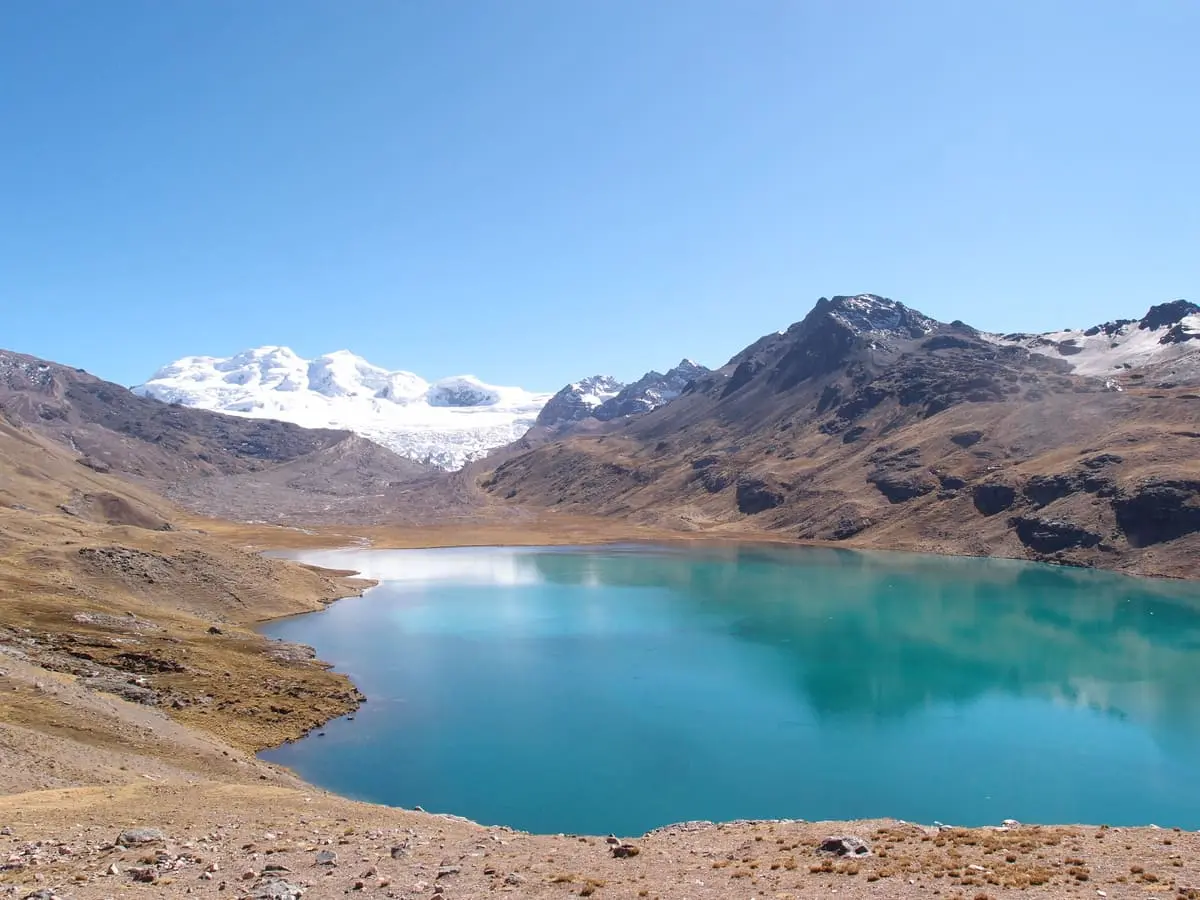
After about an hour of exploring, photographing, and enjoying the view, we descend back along the same path to Anantapata camp to resume the circuit: lunch halfway; after lunch, we set off on our hike to Ausangate Lake camp (4,650 m / 15,256 ft), which offers an impressive and spectacular landscape, with a turquoise lagoon and hanging glaciers on the mountain. Where our trekking team awaits us with a hot drink. For the evening, our cooks prepare a delicious dinner; then, we rest up for the next day.
• Meals: breakfast, lunch, and dinner.
• Accommodation: Ausangate Lake camp.
• Difficulty: challenging.
• Hiking time: 8 hours.
• Maximum elevation: 5,200 m (17,060 ft).
• Minimum elevation: 4,650 m (15,256 ft).
Day 4: Ausangate lake Camp – Abra Palomani – Soraqocho Camp.
We started with coca tea or coffee at their shop, and then we enjoyed an energizing breakfast, the energy needed to face the day. We began the ascent to Palomani Pass (5,200 m / 17,060 ft), the highest point on the Ausangate trek. The hike will be challenging and demanding (both physically and mentally): during the ascent, you can observe and closely understand the retreat of the glaciers and the geological formations of the high Andean mountains.
At the Palomani Pass, we stop to take a break, enjoy the spectacular peaks, and visit the local communities. We begin to descend gradually, observing and photographing the snow-capped Ausangate Glacier; we can see the base of the mountain that has been climbed and the colorful peaks, and we arrive at the small community of Huchuy Phinaya (4,650 m / 15,256 ft), where we will have lunch.
After lunch, we continued past the impressive bofedales (high-altitude wetlands), small lakes, llamas, and alpacas grazing on the green pampas, and hiked for an hour and a half to the Soraqocho campsite (4,700 m / 15,419 ft). At the campsite, our trekking team awaits us with hot drinks; in the evening, we’ll have dinner prepared by the high mountain chef; we spend the night in the heart of the mountains
• Meals: breakfast, and dinner.
• Accommodation: Soraqocho camp
• Difficulty: challenging. • Hiking time: hours
• Maximum altitude: (5200 m / 17,060 ft).
• Minimum altitude: (4,600 m / 15,091 ft).
Day 5: Soraqocho Camp – Khampa Pass – Pacchanta – Cusco.
Last day of our expedition to the impressive Ausangate; we started early with an energizing breakfast prepared by our high mountain chef. After breakfast, we set off from Soraqocho camp and headed toward Khampa Pass (5,070 m / 16,633 ft), where we were treated to breathtaking panoramic views of the Ausangate Glacier and a herd of vicuñas in the surrounding mountains. The hike to Khampa Pass is a gradual uphill trek through a mountain range.
From Khampa Pass. We will continue along the trail, descending gradually; we can observe the snow-capped Qayangate (5,600 m / 18,373 ft) up close, which has a glacier on its summit. At the foot of the snow-capped mountain are the colorful lagoons (Lagoon Alqaqocha) and Lagoon Verde. And on the other trail lies the Seven Lagoons of Ausangate, with lunch halfway, offering views of the imposing Ausangate. We continue along the trail and head to the small village of Pacchanta (4,200 m / 13,780 ft). Where you’ll have the opportunity to soak in hot springs—an excellent way to relax after Ausangate trek 5 days.
After this experience in the Andes at Pacchanta, we said goodbye to our Ausangate Adventure team, and then we boarded our private transportation to return to Cusco.
• Meals: breakfast, lunch.
• Accommodation: hotel in Cusco.
• Difficulty: moderate.
• Hiking time: 5–6 hours
• Maximum altitude: 5,070 m / 16,633 ft
• Minimum altitude: 3,300 m / 10,827 ft
What is included in the Ausangate Trek 5 days
Ausangate & Rainbow Mountain 5 days / 4 nights Trek includes:
- Pre-departure informational meeting.
- Transfer from your accommodation in the historic center of Cusco.
- Return to your accommodation (Historic Center of the city).
- Professional local guide in English, Spanish, and other languages.
- Camping equipment: dining tents, kitchen tents, tables, chairs, and cooking gear.
- First aid kit, oxygen supply.
- 4 nights of camping in comfortable North Face or Hard Wear tents.
- Sleeping pad, rain poncho, hand towels.
- Experienced chef to prepare meals: breakfasts, lunches, and dinners.
- All meals on the trek, except for dinner on the last day.
- Wake-up tea every morning.
- Afternoon tea.
- Daily water and snacks.
- Pack horses to transport all camping equipment.
- 1 emergency horse.
- Entrance ticket to Ausangate and Rainbow Mountain.
Ausangate & Rainbow Mountain 5 days / 4 nights Trek does not include:
- Dinner on the last day in Cusco.
- Sleeping bag, trekking poles.
- Travel insurance (recommended).
- Tips.
- Additional costs or delays beyond our control.
What to bring for the Ausangate Trek 5 days
When planning your Ausangate to Rainbow Mountain trek for 5 days and 4 nights, it's crucial to carefully select what you'll bring due to the high altitude, cold weather, and rugged terrain. Here are some essential items you should include in your packing list:
Essential Items:
- Original Passport: You must carry your original passport; copies are not accepted. It should be valid for at least 6 months to enter and exit Peru and have two blank pages for stamps.
- Valid Student ID: If you are under 25, you will need to present a valid university ID that clearly shows your photo, personal details, and expiration date.
- Thermal Clothing: Pack several layers of thermal clothing, such as base layers and wool or down jackets, along with accessories like a warm hat, gloves, and a scarf or neck gaiter.
- Waterproof Gear: Don’t forget to include a waterproof jacket and pants to protect against rain and snow.
- Sleeping Bag: Bring a sleeping bag that will keep you warm during cold nights, preferably one designed for low temperatures.
- Proper Footwear: Ensure you have durable hiking boots that provide good ankle support and are comfortable for long distances.
- Backpack: A sturdy and spacious backpack is necessary to carry your gear, food, and water during the trek.
- Lighting: Bring a flashlight or headlamp to illuminate your path during the nights and early mornings.
- Hydration: Stay hydrated at all times by carrying a water bottle or hydration system.
- Sun Protection: Protect yourself from the Andean sun with sunscreen and sunglasses.
- Trekking Poles: Trekking poles can be useful for maintaining balance and stability on difficult terrain.
What to Carry in Your Daily Backpack:
- Hat and Sunglasses: The sun in Ausangate is intense, so a good hat with neck protection and UV-filtering sunglasses are essential.
- Sunscreen: Solar radiation can be intense, so protect your skin with high-quality sunscreen.
- Scarf or Bandana: These multifunctional cloths are useful for protecting against dust and cold.
- Wool Hat or Chullo: To keep warm during the cold nights and early mornings.
- Hiking Gloves: Lightweight, waterproof, and breathable gloves are perfect for keeping your hands warm without losing dexterity.
- Waterproof Jacket: Always carry a waterproof jacket regardless of the season. Materials like Gore-Tex are recommended.
- Waterproof Pants: In Ausangate, you’ll need these due to the variable weather.
- Thermal Layers: A base layer to retain heat, a mid-layer such as a fleece, and an outer waterproof layer to protect against rain and wind.
- Lip Balm with SPF: To prevent your lips from drying out due to the climate and altitude.
- Insect Repellent: Ensure it contains DEET or picaridin.
- Hand Sanitizer: Useful for maintaining hygiene during the trek.
- Toilet Paper: Carry a small amount in a waterproof plastic bag.
- Personal First Aid Kit: With basic medications for headaches, stomach issues, or colds, as well as band-aids and gauze.
- Camera and Extra Batteries: Cold temperatures can drain batteries quickly, so bring extras or a portable charger.
- Energy Snacks: Bring granola bars or a mix of nuts for extra energy.
- Cash: Carry small bills for buying souvenirs or using restrooms in villages.
What to Pack in Your Duffle Bag:
We will provide a duffle bag to store items you don’t need during your daily trek. The pack horses will transport this bag, but make sure it weighs no more than 8 kg, including the sleeping bag and inflatable mattress.
- Sleeping Bag: If rented, it generally weighs around 2 kg.
- Inflatable Mattress: For added comfort, an inflatable mattress is a great option.
- Comfortable Camp Shoes: After walking all day, you’ll want to change into lightweight camp shoes.
- Warm Jacket: Temperatures can drop significantly at night, so bring warm clothing.
- Breathable Shirts: Pack moisture-wicking clothing, preferably synthetic materials like polyester.
- Hiking Pants: Lightweight, quick-drying pants are ideal. Convertible pants with knee zippers are very practical.
- Hiking Underwear and Socks: Bring several pairs to stay dry and comfortable.
- Quick-Dry Towel: Essential for camping.
- Biodegradable Soap: To avoid harming the natural environment.
- Wet Wipes: Useful for staying clean during the trek.
- Basic Personal Hygiene Items: Toothbrush, toothpaste, etc.
- Power Bank: Bring one with enough capacity to keep your devices charged.
- Plastic Bags: To keep wet or dirty clothes separate from your other belongings.
Ausangate Trek 5 days travel information
How Many Days Should You Acclimate Before the Trek?
It is crucial to be well-acclimated to the altitude before undertaking a trek. We recommend arriving in Cusco at least 2 days before the trek begins to help you acclimate and avoid potential altitude sickness issues during the trek. If you have already been in another high-altitude area in Peru before arriving in Cusco, we still recommend spending a full day in Cusco to rest, recover from your journey, and enjoy the sights.
Travel to Cusco
Cusco's airport currently only operates domestic flights. All international passengers arriving by air must disembark in Lima and go through customs. It is important to note that due to Cusco's high altitude, flights may experience delays or cancellations. Additionally, any changes in weather can halt air traffic. If you prefer a land alternative, buses are a viable option, although the journey can be long, especially from Lima. Buses from Lima can take approximately 20 hours to arrive.
Pickup
Ausangate Adventure can pick you up from your hotel, as long as it is located in Cusco's Historic Center. During the briefing, your guide will coordinate the meeting time, but please be aware that waiting time may vary between 30 and 45 minutes due to local traffic. Cusco has narrow, cobblestone streets, which can make access to some hotels and Airbnbs difficult. Some locations may be in areas with no vehicular access or on steep inclines, complicating luggage transport. It is advisable to book accommodation with easy access to facilitate transport.
Luggage Storage
You can safely leave any additional luggage in Cusco, either at your hotel or with us at Ausangate Adventure while you are on your trek. We will store your luggage in the morning before your trek begins and return it to you once you return to Cusco. It is important to ensure that your bags are clearly labeled for easy identification.
Altitude Sickness
Altitude sickness occurs when there is less oxygen available in the air at high altitudes, such as in Ausangate. It can affect travelers regardless of age, gender, or physical condition. Common symptoms include headache, loss of appetite, dizziness, and difficulty sleeping. While it may disappear in a short time for some, for others it can persist for several days if not properly managed. We recommend following these suggestions to reduce the likelihood and severity of altitude sickness:
- Consult Your Doctor: It is advisable to talk to your doctor before your trip. They may recommend taking acetazolamide (Diamox), a medication that can help reduce symptoms if taken one or two days before starting the trek.
- Stay Hydrated: Drink plenty of water before and during your stay. Some people find nasal saline solutions in the form of drops or sprays beneficial.
- Take It Easy: Upon arrival, take it easy and allow your body to adjust by resting for 10 to 15 minutes. Try to rest as much as possible during your trip, as excessive exertion can worsen symptoms.
- Light Diet: Before heading to high altitudes, follow a light diet. Prefer easily digestible foods like fish, chicken, and hot soups. Avoid greasy foods, beef, lamb, and caffeine or alcohol.
- Coca, Mint, and Muña Teas: These can help alleviate symptoms.
- Use Oxygen Wisely: Proper use of supplemental oxygen can aid in your recovery.
Climate
The climate in the Ausangate region is extremely variable. It can start favorably but change quickly. Nights are usually cold, with average temperatures around -10°C, while daytime temperatures range from 18°C to 25°C. Cold winds are constant, and rain or snow can be expected at any time. Despite these unpredictable conditions, the 4-day trek to Ausangate and Rainbow Mountain in the Cusco Andes will be an unforgettable experience. It is essential to be prepared with appropriate clothing and gear for various weather conditions and to maintain a positive attitude and adaptability to changes. The beauty of the landscape and the sense of achievement at the end of the trek will make every challenge worthwhile.
First Aid
Each Ausangate Adventure guide is trained in first aid. They will carry a first aid kit for basic medical situations and oxygen during the trek. They will take good care of you. If something unexpected happens and you feel you can no longer continue the trek, they will determine the safest, quickest way to get you off the trail and to a clinic in Cusco.
Food
All meals and snacks will be provided throughout the trek, up to the last lunch on the Ausangate to Rainbow Mountain trek. We understand you may be interested in the quality of our food. While each meal is prepared by a chef in a small tent on a portable stove, our clients are satisfied with the excellence of our dishes. Each chef is professionally trained to prepare the best breakfasts, lunches, dinners, and snacks. At the end of each day’s trek, a delicious dinner awaits you, cooked in the heart of the Andes, which will surely exceed your expectations about trekking food.
We use fresh ingredients purchased from the Cusco market and transported by pack horses led by our muleteers. These ingredients are then prepared by our chefs to ensure that each dish is fresh, healthy, and delicious.
Dietary Needs
Do you have special dietary requirements? Don’t worry; we are prepared to accommodate vegetarians, vegans, and those with food allergies.
Water
Ausangate Adventure will ensure that water is available at every meal. The water will be boiled, purified, and cooled before serving to our clients, ensuring it is safe to drink. However, for the first morning of the trek, you should provide your own water due to the preparation process. It is recommended to start the trek with 2-3 liters of water, so make sure you have a suitable bottle or camelback to carry it.
Environmental Impact
At Ausangate Adventure, we use biodegradable soap and ensure that all our trash is brought back to Cusco. Our muleteers are trained to keep the trails clean and collect waste. Additionally, we are committed to environmental preservation and conservation by managing waste responsibly. We adopt practices that minimize our environmental impact.
Protests and Strikes
Protests and strikes are common in Peru and may affect our travel plans. Roads may be blocked, and trains may be halted. However, we will do our best to keep your original itinerary, even if it means departing a night early. In some cases, trips may be canceled. If there are any changes, our operations team will contact you. Your safety is our top priority, and we will take the best measures to protect you in any unforeseen situation.
Lost Items
Please take special care of your belongings and ensure you collect everything when leaving our vehicles, campsites, or restaurants. You are responsible for your personal items during the trek.
Price for the Ausangate Trek 5 days
Trek in Shared Service.
Price: 500 USD per person.
This shared or group service means that you will be taking the tour with other people. This standard service is conducted with a group of 10 to 16 people, with available departures. So, if you are just one or two people, don't worry, you can join one of our groups.
Trek in Private Service.
This private and exclusive service with daily departures is a way to take this trip where the service is much more personalized. Prices vary according to the number of travelers: one, two, three, four, or more travelers. Please, if you want private service, request information at info@ausangateadventure.com or through our WhatsApp at +51 914201334.
Ausangate Trek 5 days FAQs
How is the Trek from Ausangate to Rainbow Mountain?
The trek from Ausangate to Rainbow Mountain is a high-altitude hiking route that traverses the Vilcanota mountain range in Peru. It is a challenging hike, crossing high mountain passes, glacier lakes, and isolated Andean communities.
What is the duration of the Ausangate trek?
The duration of the Ausangate trek varies from 3, 4, 5, or more days, depending on the chosen route and hiking pace. Generally, most hikers complete the trek in about 3 to 5 days. Be mindful of the weather conditions and altitude when preparing for this high-altitude hiking experience in the Vilcanota range, Peru.
When is the best time to undertake the Ausangate trek?
The most favorable time to undertake the Ausangate trek is during the dry season, which runs from March to December. During this period, you will experience more stable and dry weather, making it easier to hike through the mountains. Conditions are generally safer and more pleasant for hikers, with less chance of rain and better visibility of the stunning landscapes of the Vilcanota range.
What is the altitude of the Ausangate to Rainbow Mountain trek?
The trek from Ausangate to Rainbow Mountain (Vinicunca) takes place at high altitudes, starting around 4,200 meters above sea level and reaching its highest point at Rainbow Mountain, 5,200 meters (17,060 feet). Due to these heights, it is crucial to be well acclimated to fully enjoy the experience without major altitude-related difficulties.
Is it safe to do the Ausangate to Rainbow Mountain trek?
Safety on the Ausangate to Rainbow Mountain trek depends on several factors, including physical preparation and experience in high-altitude trekking. Although it is generally safe, it is a challenging trek that requires caution and respect for the natural environment. It is essential to follow the recommendations of expert guides, bring the appropriate gear, and be prepared for sudden changes in weather conditions. The Ausangate to Rainbow Mountain trek can be a physically, mentally, and safely rewarding experience for those willing to tackle the challenge.
Is it necessary to have a guide for the Ausangate trek?
It is advisable to have an experienced guide for the Ausangate trek, especially if you are not familiar with the area or if this is your first time hiking at high altitudes. A guide will provide not only route and terrain guidance but also expert advice on safety and first aid. Additionally, a guide can enhance your experience by providing information about the history, culture, and local flora and fauna.
How do i get to the start of the Ausangate to Rainbow Mountain trek?
The trek typically starts in the village of Tinke, which is about a 3-hour drive from Cusco. You can reach Tinke by bus or private vehicle from Cusco. Generally, your tour operator will arrange the transportation for you.
How difficult is the Ausangate to Rainbow Mountain trek?
The trek from Ausangate to Rainbow Mountain is known to be challenging due to its mountainous terrain and high altitude. Hikers need to be in good physical condition and have experience in high-altitude trekking to successfully complete this route.
How can i prepare for the Ausangate to Lake Sibinaqocha trek?
Prepare for the trek from Ausangate to Lake Sibinaqocha with these steps: 1) Acclimate to the altitude in Cusco. 2) Improve your physical fitness with cardiovascular and strength training exercises. 3) Acquire the appropriate gear: warm clothing, hiking boots, a backpack, and camping equipment. 4) Stay well-hydrated and bring energy foods. 5) Train at similar altitudes if possible. 6) Consult with a healthcare professional before the trip. 7) Research the route and weather conditions. 8) Consider hiring an experienced guide for safety and navigation. 9) Pack a basic first aid kit. 10) Be mentally prepared to enjoy the stunning natural and cultural beauty.
Prices
SHARED SERVICE
$$500 USD USD per person
- Daily departures subject to availability.
- Reference price for this service.
- Final availability is confirmed by our travel team.
Private Service
On request
- Flexible schedule.
- Recommended for families or private groups.
- Custom pace and private logistics.
Similar tours
Tours that might also interest you